Montessori Method Explained: Teaching Techniques & Learning Styles



Montessori education is a child-centered approach developed by Dr. Maria Montessori. It focuses on hands-on learning, self-directed activity, and collaborative play.
Unlike traditional methods, children in Montessori classrooms choose activities that interest them while teachers act as gentle guides. This method creates curiosity and encourages lifelong learning.
Montessori teaching is grounded in the belief that each child learns best at their own pace, through exploration and discovery. The environment is thoughtfully prepared to support independence and meaningful engagement.
Here’s how the Montessori approach works in practice:
Age Group | Focus Areas | Examples of Activities |
| 0–3 years | Movement, senses, early communication | Grasping toys, simple language games |
| 3–6 years | Independence, coordination, basic academics | Pouring water, sandpaper letters, counting beads |
| 6–9 years | Imagination, reasoning, group work | Research projects, science experiments |
| 9–12 years | Abstract thinking, social development | Field trips, team tasks, real-world topics |
| 12–18 years | Identity, responsibility, real-life learning | Internships, business projects, social work |

The Montessori Method stands apart from traditional education models due to its child-centered approach and emphasis on independent learning.
Here are some of the key features that make the Montessori Method unique:
| Feature | Montessori Approach | Traditional Approach |
| Learning Style | Hands-on, self-paced | Teacher-led, same pace for all |
| Role of Teacher | Guide/Observer | Instructor |
| Grouping of Students | Mixed ages | Same age |
| Discipline Style | Self-discipline encouraged | Rules enforced by teachers |
| Learning Materials | Real-life objects, tools | Mostly books and worksheets |
| Evaluation | Observations, portfolios | Tests and grades |
Montessori techniques are rooted in observation, choice, and respect for the child's pace of learning. Teachers use specific methods to guide learning:
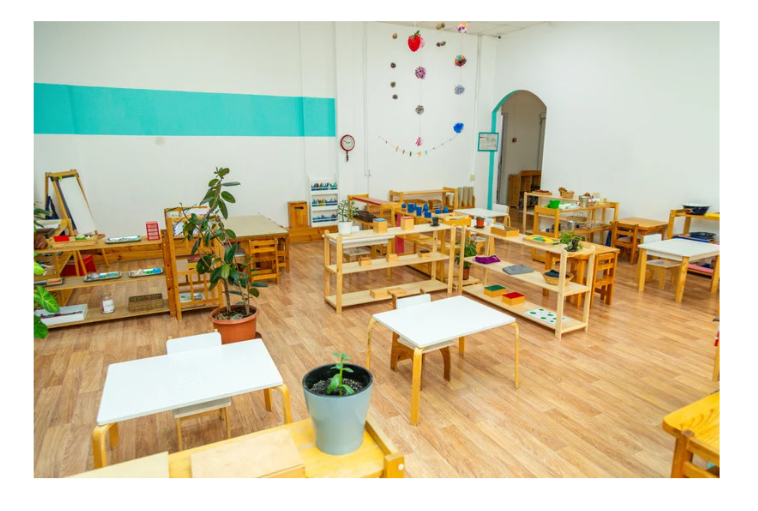
Montessori classrooms are calm, focused environments with a strong sense of respect and responsibility. Here's what defines behavior in a Montessori setting:
Montessori recognizes that every child learns differently. Here’s how the method supports various learning styles:
One of the strongest features of the Montessori approach is how it tailors learning to each child:
| Activity Name | What It Teaches |
| Pouring Water | Motor control, focus |
| Puzzle Maps | Geography, spatial awareness |
| Bead Counting | Math understanding |
| Sound Boxes | Listening skills, sound matching |
| Buttoning Frames | Life skills, independence |
Ask yourself:
If you answered yes, Montessori education might be perfect for your child.
Here’s what you need to know:
Anyone passionate about early childhood can apply – parents, teachers, even career-changers!
Montessori is more than just an education method – it’s a way of helping children grow into confident, curious, and capable individuals. It helps them think, learn, and love knowledge for life.
Get started today with Interval learning, where real learning begins!
The Montessori education method is typically suitable for children from ages 2.5 to 12, though it can be adapted to suit learners of all ages.
Yes, Montessori teaching methods do follow a syllabus, but it’s flexible and personalized to match each child’s learning pace and interests.
No, while it’s more common in private settings, some public schools also implement the Montessori method of teaching.
It is recommended to complete your 12th (Higher Secondary) for better comprehension. However, some institutes accept students post-10th if they meet the minimum age requirement of 18 years.
No, teaching experience is not necessary. The course is beginner-friendly and ideal for anyone interested in learning what is Montessori method of teaching.
Yes, you will receive a certificate that qualifies you to teach using Montessori teaching methods or even start your own Montessori preschool.
Absolutely! Thanks to Montessori online teaching methods, the course is flexible and allows you to study at your own pace alongside your job or academic commitments.
Many Montessori education method training programs are recognized globally. Make sure to check for international affiliations or accreditations if you aim to teach abroad.